I’ve spent years analyzing sleep ergonomics, and if there is one thing I’ve learned, it’s this: Most "orthopedic" pillows are marketing fluff. If you’re waking up with a shoulder that feels like it’s been crushed or a neck "kink" that won't quit, you don't just need a new pillow—you need a specific height adjustment.

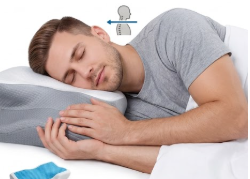
Side sleeping is the most demanding position for your spine. You are essentially trying to bridge a gap between your ear and a mattress while gravity tries to pull your head down.
The "Loft Gap" — Why Your Current Pillow is Failing
The main reason side sleepers hurt is spinal shearing.
The Neck Issue: If the pillow is too low, your neck bends toward the mattress.
The Shoulder Issue: When the neck isn't supported, your body compensates by "shrugging" the shoulder upward, putting immense pressure on the rotator cuff.
1. The "Custom" Fix: Eli & Elm Side Sleeper
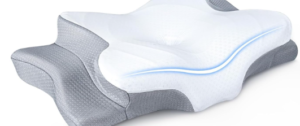
This is my top recommendation for 2026 because it doesn't assume your body is a standard size. It’s shaped like a U-turn (a crescent).
2. The Buoyancy Factor: Saatva Latex
Buy AMAZON
Memory foam is popular, but it has a "sink-hole" problem. You start supported, but by 4:00 AM, the heat from your head has softened the foam and you've bottomed out.
How to Tell if a Pillow is Actually Supporting You (The Wall Test)
Don't trust the "Firm" or "Soft" labels on the box. They mean nothing because your mattress firmness changes the equation.
Stand against a wall in your side-sleeping stance.
Have someone look at your nose. It should be perfectly centered with your chest.
The Trick: If you have to tilt your head to feel comfortable, that’s exactly how much "loft" you need to add or subtract from your pillow.
The "Anti-AI" Checklist for Pain-Free Sleep
Buy AMAZON
To truly fix shoulder pain, a pillow is only 80% of the solution. Here is the missing 20%:
The Knee Gap: If you sleep on your side, put a thin pillow between your knees. It stops your top hip from pulling your lower back out of alignment, which—believe it or not—actually affects how much pressure you put on your neck.
The "Hug" Pillow: Hugging a secondary pillow prevents your top shoulder from collapsing forward. This keeps the chest open and prevents that "crunched" feeling in the morning.
Rotation: If you use a foam pillow, rotate it 180° every week. Foam has a "memory," and you don't want it to remember a sagging position.
Summary: My 2026 Recommendations
| If you feel... | Try this... | Why? |
| Sharp neck pain | Tempur-Pedic Contour | It locks the cervical spine in place. |
| Numbness in arms | Eli & Elm (Crescent) | Relieves pressure on the brachial plexus. |
| Ear pain/Hot head | Purple Harmony | The grid structure stays at room temp. |
Final Verdict
There is no "best" pillow, only the best pillow for your shoulder width. If you’re a 15-year-old student or a busy professional, your body is still changing and reacting to daily stress. Don't buy a pillow you can't adjust. Look for "Adjustable Fill" so you can manually add or remove stuffing until your spine is a straight line.
Stop sleeping on a "pancake" and start measuring your loft.